

| Your situation | Method | Planning use |
|---|---|---|
| You like hearing music live and in person | Open mic nights and jam sessions | Attending is enough. You do not need to play to be welcome, so use these as a low-pressure first stop. |
| You like hearing music live and in person | Shows with several acts on the bill | One ticket puts you in front of bands you came for and bands you did not know. Use supporting acts as the discovery slot. |
| You like browsing physical spaces | Record store notices and rehearsal-space walls | Both display ads and notices from local bands, so each is a quick list of names to look up later. |
| You would rather listen from home | Profile platforms such as Hendrix, Vampr and Musofinder | Hendrix profiles can hold uploaded songs and YouTube videos. Vampr offers 50 tag categories to search, and Musofinder offers a map search. |
| You want a directory or classifieds to browse | Bandmix, Find A Musician, Gumtree, Mukken | Check which countries each one covers before you spend time on it. Bandmix has dedicated sites for nine countries. |
| You already found a band you like | Direct support after the set | Buy from the band, share the music and come back. Pair every discovery method with one of these. |
Platform and venue details in this table come from StringKick’s guide to finding musicians.
Knowing how to discover local bands starts with where they gather: open mic nights, record stores and multi-act shows in person, then online profiles and directories for follow-up listening.
For the wider picture of your area’s scene, how to find local bands is the place to begin. This guide ranks concrete methods by situation and pairs each with a way to support the artist afterward.
If you want to hear bands in person
In-person discovery comes first because it lets you hear a band at full volume before you commit to anything. It also costs little. Most of the methods below need only your time, and several of them put unsigned bands directly in front of you without any searching.
Open mic nights and jam sessions
An open mic night is the easiest entry point for finding unsigned independent musicians. StringKick’s advice to musicians looking for collaborators is to go to open mic nights and jam sessions, and it adds that you do not even have to play. That applies equally to listeners. Sit through a full evening and you hear several acts in a row, which is a faster sampler of a local scene than any playlist.
This method suits fans who want variety and do not mind uneven sets. The limit is that open mic slots are usually short and informal, so you may hear one song from a band that sounds better in a full set. Treat a strong open mic performer as a lead to follow up, not a final verdict.
- Support afterward: stay for the whole evening, applaud, and ask a performer you liked where they play next. A name and a follow are worth more to a new act than a quiet nod on your way out.
Shows with several acts on the bill
Opening acts do help you discover new bands. A bill with several acts hands you a ready-made introduction to musicians you would not have searched for. Arrive in time for the first set rather than just the headliner, because the earlier slots are where local and unsigned acts are most likely to appear. If you do not yet know where shows are listed, how to find live music near me covers the listings side.
This approach suits people who already go to shows and want to get more from the ticket they have bought. It suits less well anyone who prefers to hear a band at length first, because a support set is brief.
- Support afterward: buy directly from the band if they sell music or merchandise at a table, and tell the act which song you liked. Direct purchases reach the artist without anyone in between.
Record stores
A record store is a physical hub for local music. StringKick suggests that musicians put up an ad or notice at their local music store, which means the board near the door can be a running list of nearby acts looking for players, gigs or attention. Read it, note the band names, and look them up when you get home.
The shelves can be just as useful as the board. Browsing the bins is slower than an app search, but it shows you music a band chose to put on a physical release, which is a sign of commitment worth noticing. This suits collectors and anyone who enjoys digging. It suits less well anyone short on time, since a notice board gives names rather than music you can play on the spot.
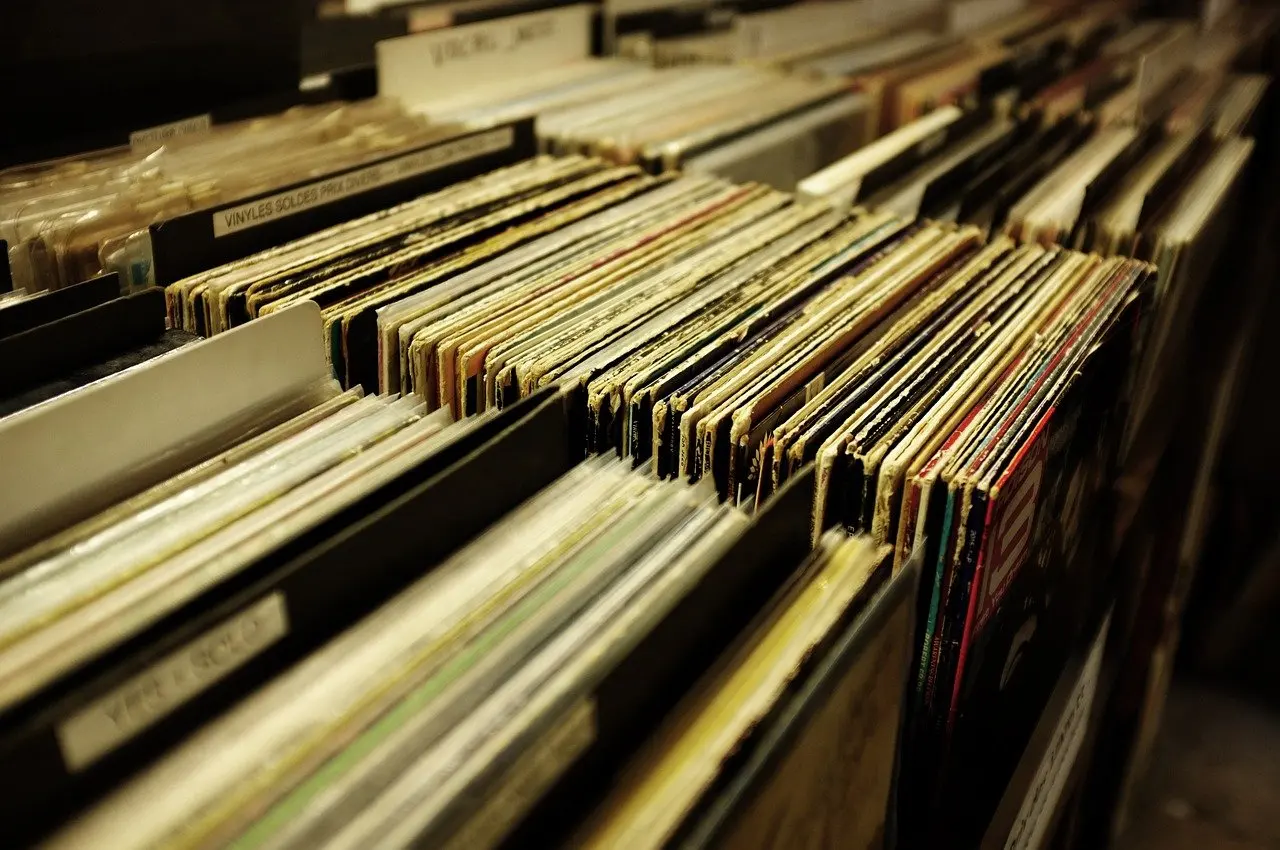
- Support afterward: buy a local release at the counter if the store stocks one, and ask whether the band has an upcoming show. A purchase and a question both tell the store that local music is worth shelving.
Rehearsal spaces and group lessons
Rehearsal spaces often have a wall covered in musicians-wanted ads from bands, according to StringKick. For a fan, that wall is a snapshot of which bands are active and growing. Each ad is a name you can search online afterward.
StringKick also describes group lessons as a good way to get to know musicians who share your interests. If you play an instrument yourself, this is the slower but more social route into a local circle. Friendships formed there tend to bring invitations to the shows those musicians play. If a band you meet this way is just starting out, how to get your first gig as a band explains how new acts land early shows, which helps you understand what they are working toward.
- Support afterward: attend the first show a new band plays. Early crowds matter, and a friendly face in the room is a real boost.
If you would rather listen from home
Online discovery works best when you already have a few band names or when you want to hear a sample before leaving the house. The platforms below were built mainly for musicians looking for collaborators, but their profiles and search tools also expose local acts to anyone browsing.
Hendrix profiles
Focused on making it easy to find collaborators near you, in the US. Its profiles can hold uploaded songs, YouTube videos and a musical resume, so a single profile can show you what a musician sounds like and what they have done. That makes it one of the more direct answers to where local bands post music so you can hear it.
It suits listeners in the US who want to sample a nearby musician quickly. It is less useful outside that market, and a profile with no uploads tells you little.
- Support afterward: reach out with a specific compliment about a track. Musicians building a profile notice that kind of feedback.
Vampr and Musofinder
Vampr offers 50 categories that musicians can tag themselves with or search through. For a fan, those tags are a way to narrow a search to the genre or role you care about rather than scrolling through everyone. Musofinder takes a different approach, with a map-based search and a range of filters. That suits you if the question you want answered is who is closest to you.

Choose Vampr when you know the style you want and Musofinder when location is the deciding factor. Both are built around musicians finding each other, so expect profiles that read as introductions and not as polished listening experiences.

- Support afterward: follow the musicians whose profiles you enjoyed, so you see their next show announcement when it is posted.
Facebook posts
Facebook is where many bands and local groups announce shows and share new music. StringKick notes that the average post there is seen a couple hundred times, which is a useful reminder of how much a single share can do for a small act. For a fan, this means a local band’s page or a local music group can be a steady feed of new names.

- Support afterward: share the post or the track you liked. For a band with a small following, a share from a real listener reaches people the band could not reach alone.
If you want a directory to browse
A local band directory is the most organised way to find unsigned bands in your area, and the options differ mainly in the countries they cover. Most of these were designed as classifieds for musicians, so use them to learn who is active and then listen elsewhere.
Bandmix and Find A Musician
StringKick describes Bandmix as perhaps the largest network of online musician classifieds, with dedicated sites for nine countries including the US and UK. Find A Musician has a good presence in the US, Canada and Australia. If you live in one of those countries, either is a sensible directory to browse for names of active local acts.
The listings are written by musicians seeking bandmates, so the best use for a fan is to note band names and the descriptions of their style, then search for their music separately.
Gumtree and Mukken
Gumtree is a UK classified ads site with a section focused on bands and musicians, which makes it a genuine local band directory for UK readers. Mukken is a platform founded in Germany. StringKick suggests it might be the only platform in Europe with both a mobile app and a web dashboard, which matters if you want to browse on your phone and on a larger screen.
Match the directory to your country. A UK reader gains little from a US-only service, and a listener elsewhere in Europe has a better chance of finding nearby acts on Mukken.
Musicians Connect
Musicians Connect currently serves only musicians in the US. It applies quality controls to help minimise low-quality posts, so the listings tend to carry more useful detail than a casual classifieds board. Because access is limited to musicians, fans outside that group should start with a different directory and treat this one as relevant mainly if you also play.
- Support afterward: when a directory leads you to a band, message them with where you heard about them and what you want to hear next. A named, specific fan is easier for a band to remember than a silent follower.
If you want to support the band afterward
Local acts depend on audiences who return, and the actions that help most are simple and cheap. Pick the ones that match how you found them rather than doing everything at once.
Choosing a way to help
- Buy direct. A release or shirt bought from the band at a show or a local record store goes straight to the people who made it.
- Show up twice. A second visit tells a band the first one was not a fluke. It also tells the venue that the band draws a crowd.
- Share by name. A post that names the band and the track gives your friends something to click on, and a single post can reach a couple hundred people on Facebook.
- Tell the venue. A short word to the staff or booker that you came for a particular act helps that act get booked again.
Making it a habit
The fans who help a scene most are the ones who keep going. Choose one method from each of the situations above: one in-person routine, one online source and one directory. Rotate through them, and you will keep meeting new acts without it feeling like homework. Because every method here also gives you a natural way to say thanks, discovery and support can happen in the same evening.
Frequently asked questions
| Question | Answer |
|---|---|
| How can I find unsigned bands in my area? | Combine physical and online sources. Open mic nights, record store notices and rehearsal-space walls show you who is active in person. Profile platforms and classifieds give you names to search and listen to later. |
| Where do local bands post music so I can hear it? | Profiles on platforms such as Hendrix can hold uploaded songs and YouTube videos, and Facebook pages and groups are where many bands share posts and announcements. |
| Does going to opening acts help me discover new bands? | Yes. A multi-act bill introduces you to musicians you did not search for, and the earlier slots are where local acts most often play. Arrive early and note any name you like. |
| Are there local band directories I can use? | Yes, though most are classifieds for musicians. Bandmix runs sites for nine countries, Find A Musician is strong in the US, Canada and Australia, Gumtree has a bands and musicians section for the UK, and Mukken serves Europe. |