How does music shape community identity? Through repeated shared experience: when people hear, play and remember the same songs in familiar places, that sound becomes part of how they describe themselves as a group.
The wider set of community stories sits in the Community Stories and Local Culture hub, which asks how does music build community. This article sets out the mechanisms behind that process and the conditions under which they work.
What community identity means in practice
Community identity is the shared answer to the question “what is this place like, and who are we here?” It rests on common stories, habits, landmarks and sounds. Social cohesion is the related but separate idea of how strongly people in that place trust, recognise and cooperate with one another. Music can feed both, but it feeds identity first. A song can make a neighborhood feel distinct even before it makes neighbors close.
A useful lens comes from education research. A narrative study presented in the ISME 2026 world conference programme notes that school music education has been entrusted with preserving national culture and strengthening cultural identity. The same curriculum is guided by four core competencies: cultural understanding, aesthetic judgment, artistic creativity and social responsibility. Those four terms map neatly onto how identity forms in any community. People learn what their culture sounds like, learn to judge it, make their own versions and feel responsible for keeping it going.
Shared sound and repeated performance
Music builds identity mainly through repetition. A song heard once is entertainment. The same song heard at every summer gathering, every send-off or every local game becomes a ritual marker, and the group begins to recognise itself in it.
Three things make repetition powerful:
- Common reference. Residents who know the same tunes can signal belonging with a hummed phrase or a request. Newcomers can see the reference and learn it.
- Anticipation. Recurring events give people something to expect, which ties the music to the calendar of a place and not only to a band.
- Collective memory. A song attached to a past event carries that event with it, so later performances recall the earlier one.
This is why a house band that plays the same venue regularly can matter more to local identity than a famous touring act. The regular act gives the place a consistent sound, while the one-off headliner mostly gives the place an occasion.

Venues, streets, festivals and radio as anchors
Places give music a fixed address, and a fixed address is what lets a sound become “ours”. Venues, public squares, festival grounds and broadcasts each anchor identity in a different way.
Venues and festivals
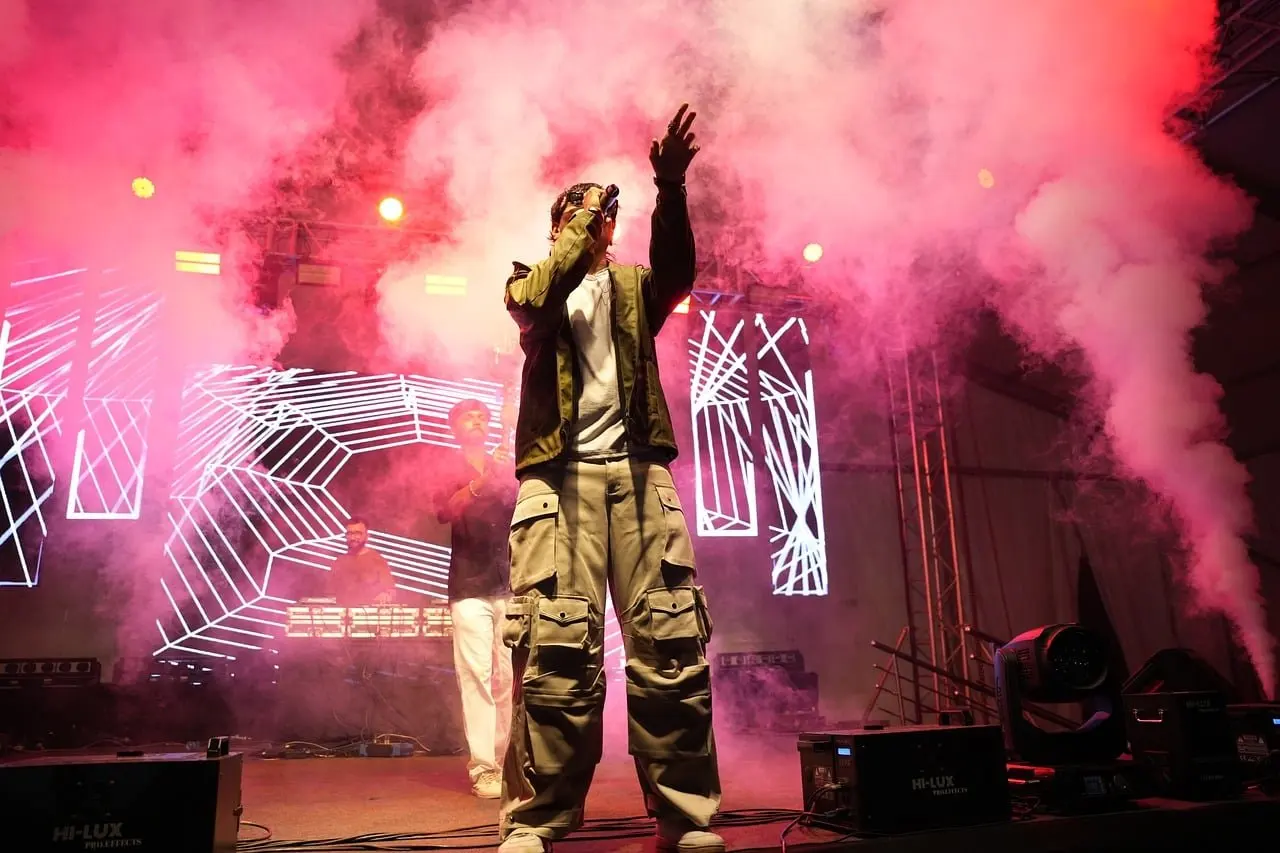
A small venue gives local musicians a reliable stage and gives audiences a reliable reason to gather. Festivals do the same on a larger scale and a longer rhythm. Both create the repeated contact that turns strangers into familiar faces. The decision for a community is whether it has somewhere for local acts to play regularly. Without that, performers tend to leave the area to be heard, and the local sound thins out.
Street music and public space
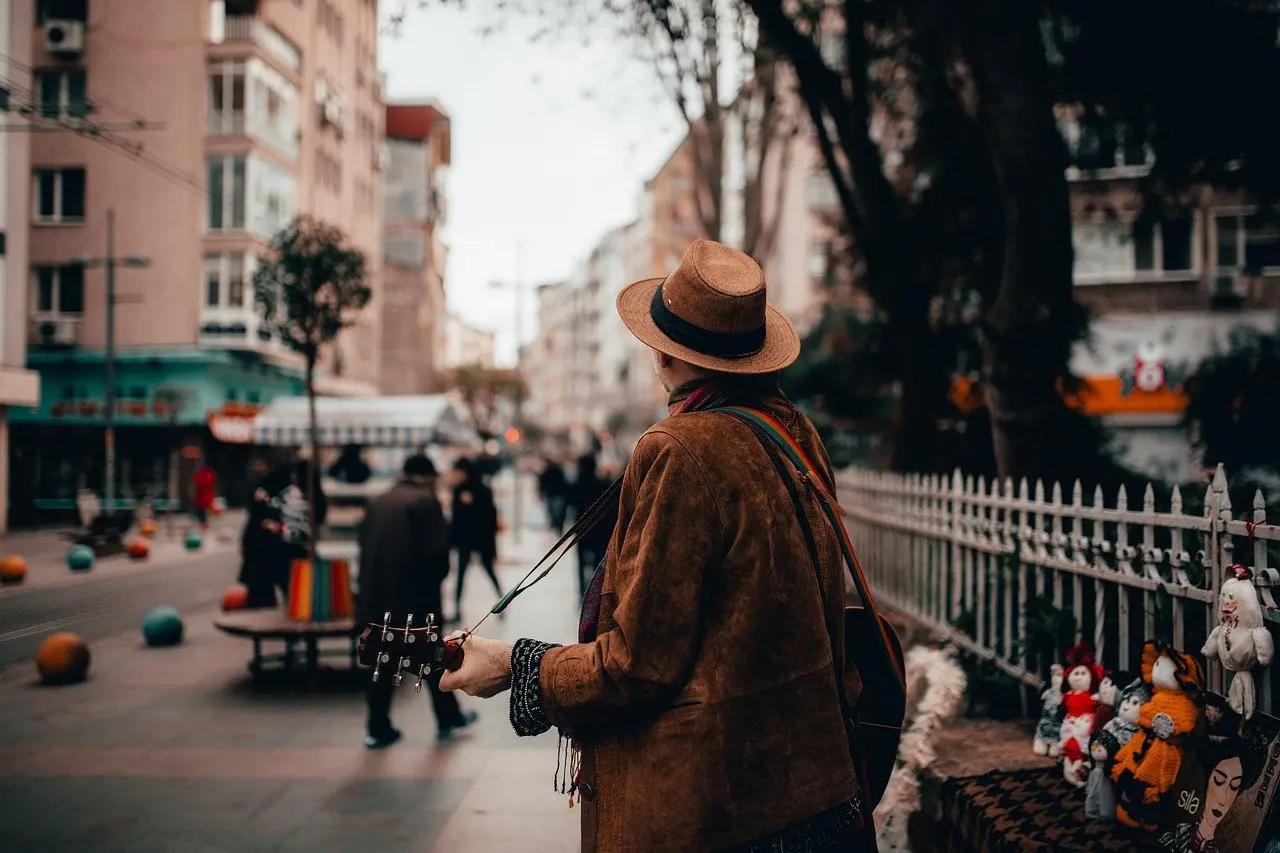
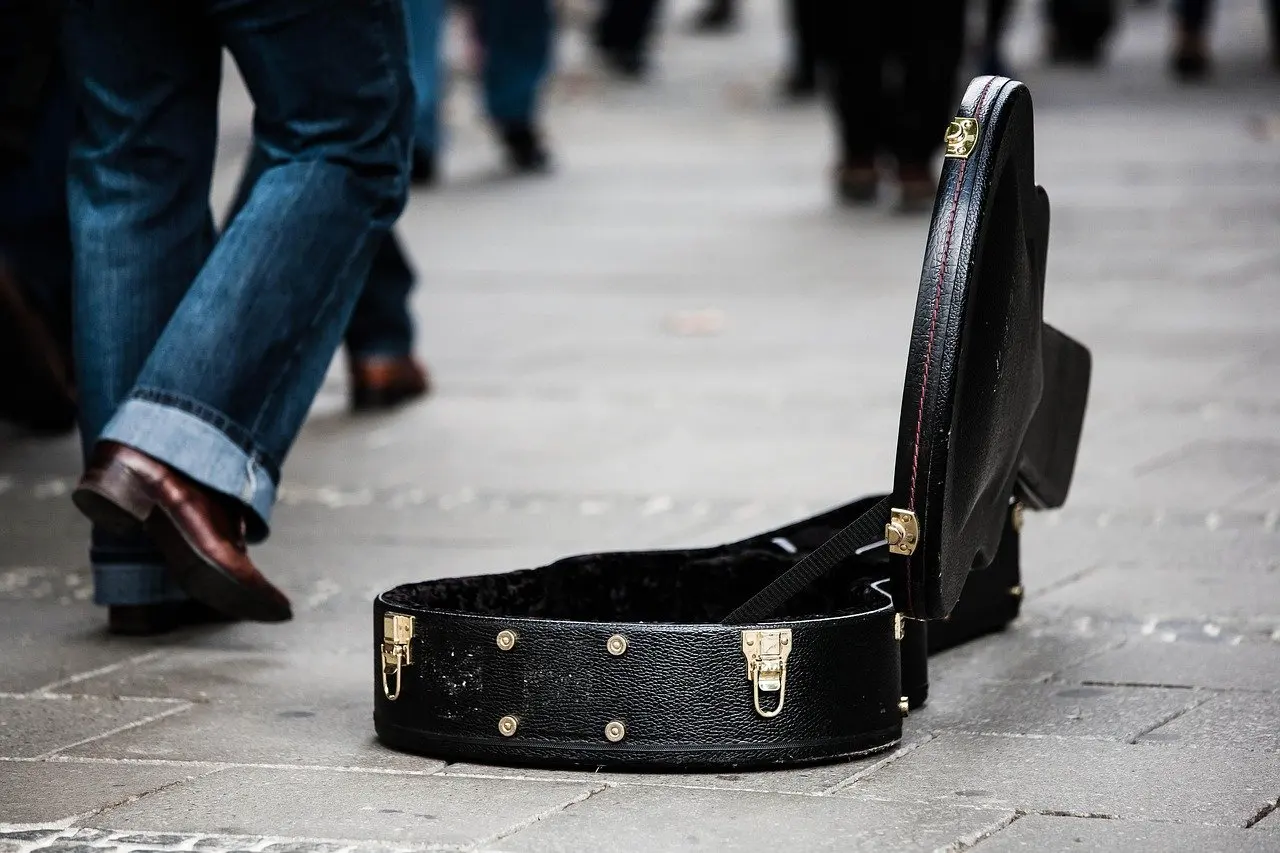
Public music reaches people who never buy a ticket. A guitarist on a sidewalk shapes the character of a street for everyone walking by, and over time the performer becomes part of how residents describe that stretch of the city. Unlike a venue, the street asks nothing of the listener, which makes it the most open form of local music.
Radio and recordings
Broadcasts carry a place’s sound to people who cannot be in the room. For residents who are older, housebound or away, hearing local artists on air keeps them attached to the place. The effect depends on the programming staying local. A station that rarely features nearby performers does little for local identity, however many people listen.
Music is one of several visible local arts that do this anchoring work. A mural, for example, gives a wall the same kind of shared meaning that a recurring gig gives a room. Readers weighing the visual side can look at how to organize a community mural project.
Participation and belonging in a neighborhood
Listening builds recognition, but making music together builds belonging. Choirs, bands, jam nights and informal sing-alongs ask people to adjust to one another in real time, which is a different experience from sharing an audience. A participant is not only a member of the crowd. A participant contributes to the sound.
This is where music and a sense of belonging in a neighborhood connect most closely. Belonging usually grows when three conditions are met:
- Low barriers. People can join without audition, expensive equipment or prior training.
- Local ownership. The repertoire includes songs, languages or styles that residents recognise as their own.
- Regular timing. The activity recurs, so a newcomer can attend again and be known.
If any of these is missing, music may still entertain, but it is less likely to bind people to the place.
How traditions pass between generations
Identity lasts only if the next generation takes up the music. Transmission happens in homes, in community groups, in apprenticeship-style learning and in schools, and the school route is the best documented in the supplied evidence.
The ISME study mentioned above describes a school curriculum that integrates ethnic music elements into broad fields. Music, fine arts, drama and dance are brought together as logically related subjects. It uses five instructional modules arranged in a spiral progression from perception to creative expression, designed around students’ cognitive development. Assessment relies on portfolios, performances, research reports and interdisciplinary project defenses. The session was scheduled for Tuesday, July 28, 2026.
Three lessons carry over to any community, not just formal schools:
- Move from hearing to making. The spiral from perception to creative expression suggests that learners absorb a tradition best when they first listen closely and then create within it.
- Connect music to its sister arts. Dance, drama and visual art give a song its context, so a tradition is learned as part of a culture and not as isolated tunes.
- Assess by performing. Judging learners through performances and projects keeps the tradition alive as practice instead of trivia.
Outside the classroom, the same logic applies to older residents who hold repertoire and stories. Recording what they remember is one way to feed those songs back into community life, and how to interview elders about local history covers how that conversation can be approached.
Why local music matters to a city
Local music gives a city a recognisable voice. Cities that sound like everywhere else tend to feel interchangeable, while cities with a distinctive scene give residents something particular to be proud of and visitors something particular to remember. That distinction is the practical reason local music matters to a city’s character.
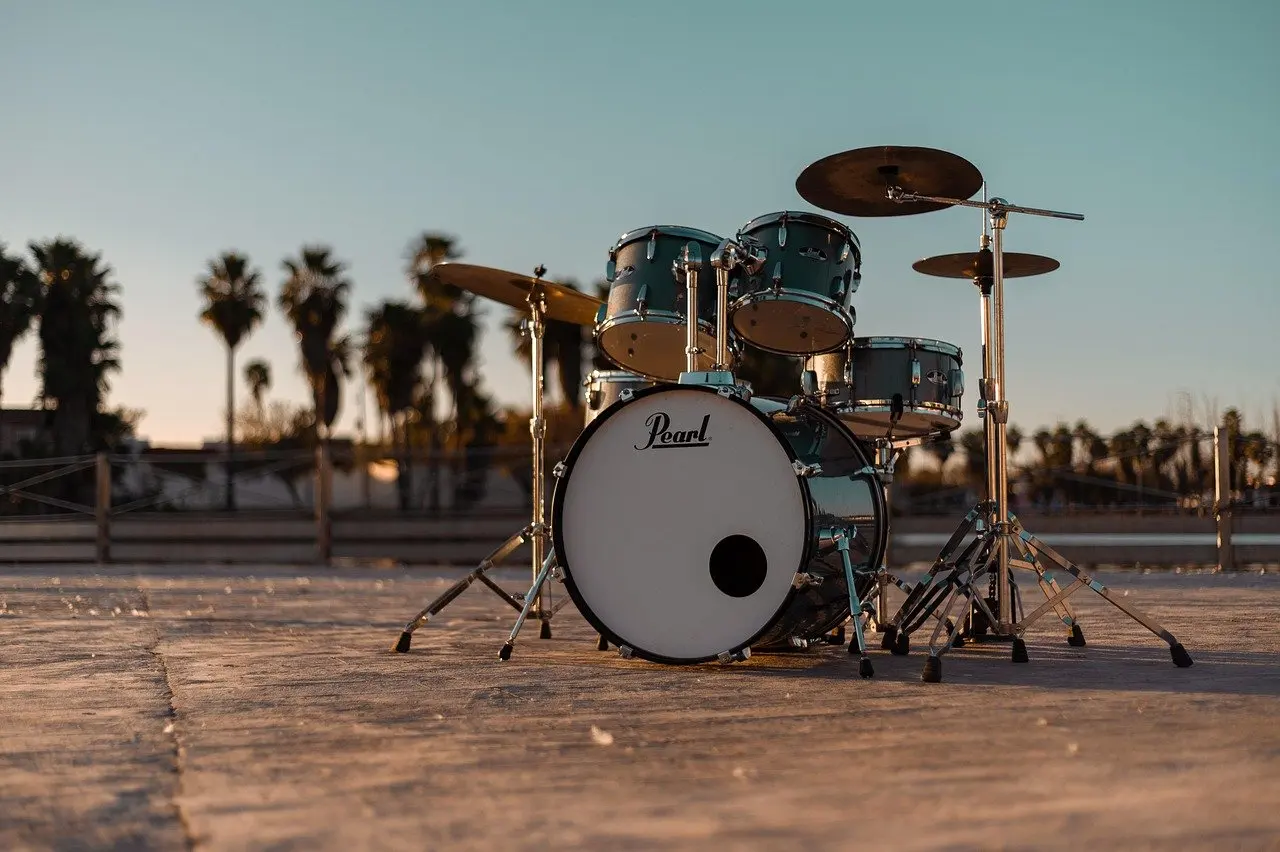
The mechanisms above work together. Repeated performance creates rituals, venues and streets anchor them, participation turns audiences into members, and teaching passes them on. Weakness at any point shows up in the whole. A city with plenty of touring shows but nowhere for local acts to play, or with young people who never learn local repertoire, will see its musical identity fade even if attendance stays high.
Limits and pitfalls
Music shapes identity, but it does not do so automatically or uniformly. Be cautious in three areas.
- Exclusion. A tradition that defines “us” narrowly can leave out newer residents. The strongest local scenes leave room for additions.
- Freezing. Teaching a tradition only as heritage can make it feel like a museum piece. The curriculum approach of moving to creative expression is a guard against that.
- Overclaiming. Education research on a specific curriculum shows how one programme approaches identity. It does not prove that every community responds the same way, so local circumstances still decide what works.
Frequently asked questions
What is the difference between community identity and social cohesion?
Community identity is how a group understands what makes its place distinct. Social cohesion is how well its members trust and cooperate with each other. Music influences both, but a shared song can build identity without any new friendships forming.
Can a neighborhood have a musical identity without a venue?
Yes. Street performance, home gatherings, choirs in community halls and radio can all carry a sound. A venue makes repetition easier, but any recurring, shared setting can do the job.
How can schools help music support cultural identity?
The ISME study describes teaching in stages that move from perceiving music to creating it, linking music with dance, drama and fine arts, and assessing through performances and projects. That approach treats a tradition as something to practise, not only to study.
Do street musicians really affect how a place feels?
They often do, because their music reaches everyone using the street, not only ticket buyers. Over time a regular performer can become part of how residents describe a stretch of the city.