Wondering what makes up your local music and arts scene and how to join it? It is the shared network of musicians, makers, venues and audiences near you, and you can start exploring it this week with a single show or gallery visit.
| Item | Value |
|---|---|
| Adults attending a live music, theater or dance performance (2015) | Nearly 32 percent (76 million adults) |
| Adults attending an art exhibit (2015) | 19 percent (45 million adults) |
| Adults who personally perform or create art | 45 percent |
| Adults taking music or music appreciation classes (2015) | 2.4 percent |
| Greater Detroit adults attending art exhibitions | 27 percent |
| Higher likelihood of civic engagement for arts participants (SPPA sample) | 386% (nearly fourfold) |
These figures come from the National Endowment for the Arts research release of August 2016 and a June 2026 NASAA Notes summary of a later NEA report. Figures can change, so check the source before you rely on them.
What the local music and arts scene includes
A scene is more than a list of venues. It is the ongoing overlap of people who make things, people who show up, and the places that bring them together.
It helps to think in layers, because most people enter through just one of them:
- Live music: bands, solo acts, jazz nights, folk circles and choirs.
- Visual art: murals, gallery shows, studio visits and pop-up exhibits.
- Performance: theater, dance, spoken word and comedy.
- Gathering spaces: cafes, libraries, parks, community centers and faith halls that lend a room.
- Connectors: organizers, volunteers, teachers, local writers and neighbors who pass the word along.
Every scene has a past, and knowing it makes the present easier to read. The history of local music scenes is a good place to start if you want to see how neighborhoods came to sound the way they do.
This site is independent and educational. It is not affiliated with any venue, artist or organisation mentioned here, and it does not sell tickets, take bookings or offer consulting.
The sections below move from the numbers to the music, then to the visual arts, and finally to a practical plan for finding your own way in. Each one points to a deeper guide when you want more detail.
How many people take part in the arts?
Plenty of people do, and the numbers show that a local scene is not a niche interest. In the NEA’s release dated Aug 30, 2016, nearly 32 percent of U.S. adults, or 76 million people, attended a live music, theater or dance performance over a 12-month period in 2015, according to the National Endowment for the Arts.
The same release put art exhibit attendance at 19 percent of adults, or 45 million people. It also reported that movie-going was the most popular arts activity, with 141 million adults, or 58 percent, seeing at least one movie in a year (NEA, 2016).
Making art is more common than watching it
The share of adults who personally perform or create art, such as playing an instrument, making visual art or writing creatively, has remained stable at 45 percent in recent years, per the NEA’s 2016 summary. That is a large group of neighbors who may be practicing in garages, kitchens and spare rooms.
Formal classes reach far fewer people. In 2015, just under 3 percent of adults took visual arts classes and 2.4 percent took music or music appreciation classes, according to the same NEA release. The gap suggests that much of the making around you happens informally, which is good news if you are a beginner.
Young adults and the trend line
Young adults aged 18 to 24 attended live performing arts events at a rate of 37 percent, versus 32 percent of all adults, in the NEA’s findings. If you feel that shows and openings skew young, the data points the same way.
The release also noted that, despite decades of declining attendance in the performing and visual arts, more recent rates were holding steady. That statement reflects the NEA’s August 2016 data, so treat it as a snapshot rather than a current reading (NEA, 2016).
Place shapes participation
National averages hide a lot of variety. In an analysis of 11 large metros, Greater Detroit residents attended art exhibitions at a rate of 27 percent, far above the national rate of 19 percent, according to the NEA.
The same analysis found that dance is popular in the San Francisco and New York metro areas. Creative writing stood out in Greater Boston, where 10 percent of adults wrote, about 4 percentage points above the national rate (NEA, 2016).
State patterns differ too. The NEA reported that Western states tend to have above-average participation, as do Eastern states such as Maryland and Vermont, while rates are below average in southern states such as Mississippi, West Virginia and Florida (NEA, 2016).
Where you live changes what is on offer, but it does not change who can make things. The NEA found that urban and rural participation rates were negligible in their differences when it came to art-making, even though arts venues cluster in cities (NEA, 2016).
Not every encounter happens in a room. In Kansas, 71.5 percent of adults engaged in the arts through TV, radio or the Internet in 2012, according to the NEA release. Tuning in to a local radio show or a streamed concert counts as taking part.
Music in your community: stages, open mics and choirs
Music is usually the quickest way into a scene, because a single evening can introduce you to performers, regulars and organizers. You do not need to know the genre or the band, only to be curious.
Live shows and small stages
Start with the shows closest to home, whether that is a cafe corner, a library lawn or a park stage. Small rooms let you hear the music up close and talk to the people making it.
A few habits make a big difference to the artists you watch:
- Arrive early so the opening acts have an audience.
- Say hello afterward and tell a performer what you enjoyed.
- Buy music or merchandise directly from the artist when you can.
- Share a show with a friend or in a local group chat.
The guide on how to support local musicians turns that goodwill into specific, repeatable habits.
Open mics
An open mic is among the lowest-barrier ways to meet a scene. You can watch a few times before deciding whether to sign up, and the audience is often made up of other performers who understand nerves.
If your area lacks a regular one, the walkthrough on how to start an open mic night covers the practical questions a host has to answer.
Community choirs
Singing together is a different kind of participation, because everyone in the room is both performer and audience. A community choir is built around a group sound rather than a single star.
The explainer on what is a community choir shows how these groups typically run and what joining one involves.
Learning an instrument later
Formal music instruction reaches a small share of adults, with 2.4 percent taking music or music appreciation classes in 2015 per the NEA. That leaves plenty of room for community-run lessons, jam sessions and informal circles, where learning is part of the social event.
Visual arts: murals, galleries and art walks
Visual art is the part of the scene you can meet without buying a ticket. It is on walls, in shop windows, in lobbies and along sidewalks, and it often tells you what a neighborhood cares about.
Murals and public art
A mural turns an ordinary wall into a shared gallery that anyone can see. The history of street murals traces how this form moved from private commission to civic landmark.
Public art can also shape how a place feels to live in. For a closer look, read about the benefits of public art for communities before the next time a new piece is proposed near you.
Galleries and art walks
In 2015, 19 percent of U.S. adults attended an art exhibit, according to the NEA’s 2016 release. Opening nights and gallery visits are one way to join that group, and they are often relaxed enough for first-timers.
An art walk strings several stops into one evening, so you can move between studios, shops and galleries on foot. If you have never been to one, the explainer on what is an art walk shows what to expect.
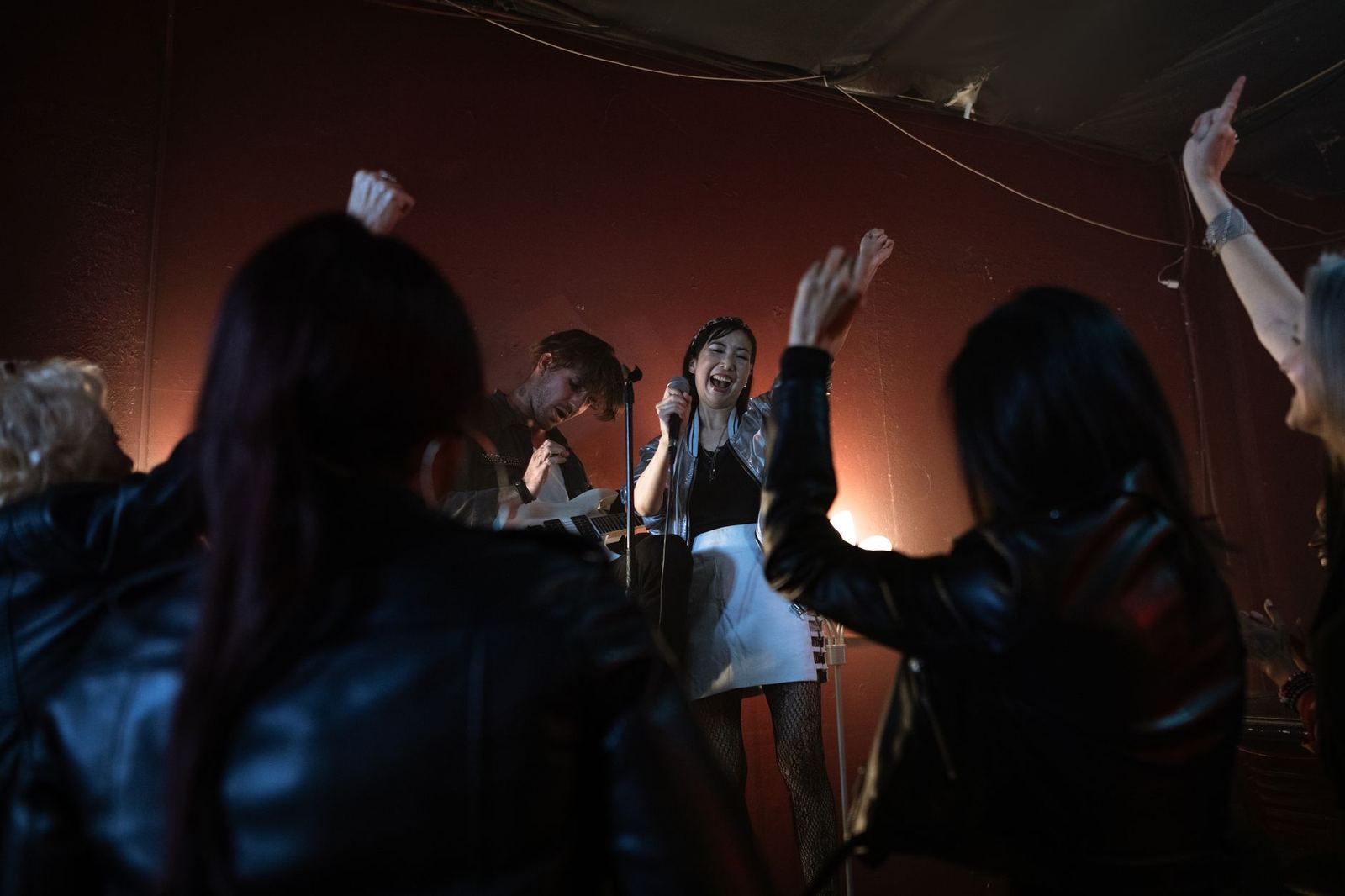
Making something together
If you would rather make than watch, group projects spread the effort and the credit. Browse these community art project ideas for starting points that suit a school, a block association or a library.
Some starting questions help any group keep a project realistic:
- Who will see the finished work, and where?
- Who owns the wall, room or space, and have they agreed?
- How can people with different skill levels all contribute?
- Who looks after the piece afterward?
Why the arts bring neighbors together
The social payoff of a scene is harder to count than ticket sales, but researchers have tried. A report from the National Endowment for the Arts, The Great Connector: How Arts Participation Renews Civic and Community Engagement, examines links between arts participation and broader community engagement, as summarized in NASAA Notes of June 1, 2026.
The analysis drew on three nationally representative surveys: the Survey of Public Participation in the Arts (SPPA) and the Household Trends and Outlook Pulse Survey (HTOPS), both administered by the U.S. Census Bureau, and the General Social Survey (GSS), administered by NORC at the University of Chicago (NASAA, 2026).
What the findings say
Within the SPPA sample, adults who took part in the arts showed a nearly fourfold increase (386%) in their likelihood of civic or community engagement, such as attending community meetings or events, volunteering or charity work. The two Census Bureau surveys gave consistent evidence, and the links persisted after researchers controlled for factors such as education level and household income (NASAA, 2026).
Results varied by survey. The HTOPS sample showed a more modest but still significant 17% increase, while the GSS did not find a significant relationship once other demographic factors were controlled (NASAA, 2026).
The Tennessee Arts Commission, relaying the NEA’s April 2026 announcement, added that adults who take part in many types of arts activities show the highest levels of civic and community engagement, compared with those who do only some or none (Tennessee Arts Commission, April 14, 2026).
How to read these results
These findings describe an association, not proof that a concert or a mural causes someone to volunteer. The mixed results across the three surveys are a reminder to stay modest about what the numbers show.
Still, the pattern fits what many people notice at a good local event: you run into neighbors, you hear about other things going on, and you leave knowing more of your community. The arts can be a reason to show up, and showing up is the first step in most community life.
How to find and explore your own scene
You do not need a perfect plan, only a few small, repeatable steps. This sequence works in most towns and takes a few weeks.
- Look around your daily routes. Check bulletin boards, shop windows and library notice walls for posters and flyers.
- Pick one music event and one visual art event. Going to both shows you whether the two crowds overlap.
- Go back to the same place twice. Regulars notice familiar faces, and a second visit is when conversations start.
- Ask who else you should see. Performers and artists nearly always know the next interesting thing.
- Offer a small hand. Helping set up chairs or hand out programs is an easy way to belong.
The role of local businesses
Cafes, bookstores, restaurants and shops often host the art on their walls and the music in their corners. Reading about local businesses and community helps you see why those relationships matter to both sides.
When you attend an event in a business, a small purchase is a simple thank-you to the host. It also helps the space keep its doors open for the next artist.
Stories behind the scene
Every scene is held together by people with stories: the host who unlocks the room, the teacher who runs a Saturday class, the painter who started on a single wall. You can read some of those accounts in community stories, and then look for their equivalents in your own area.
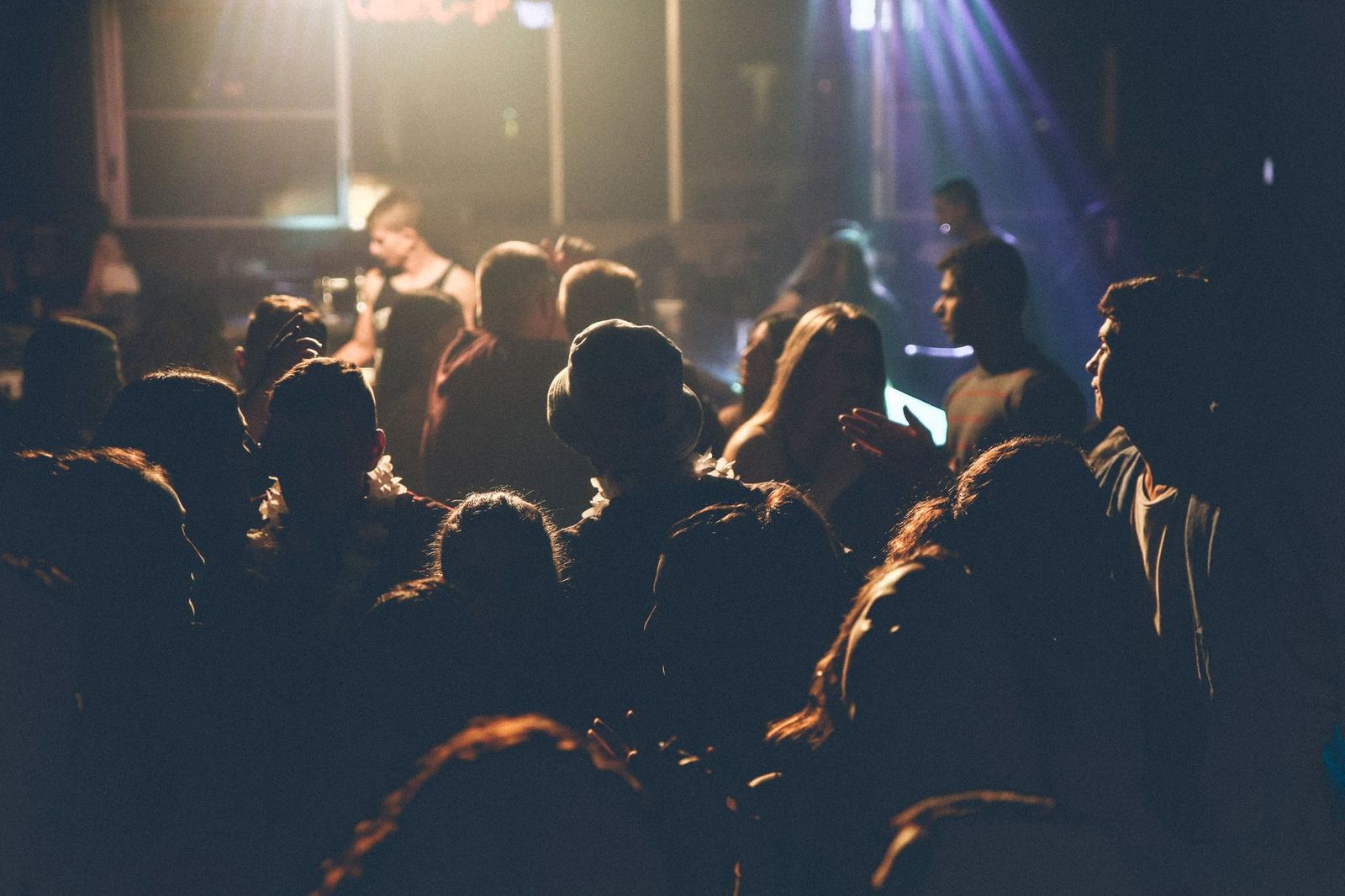
Keeping your expectations realistic
A scene can feel closed at first, especially if everyone seems to know each other. Most of that feeling fades after a couple of visits.
Not every event will suit you, and that is fine. The goal is to find the two or three rooms, walls or groups where you feel at ease, and to keep going back.
Frequently asked questions
What is a local music and arts scene?
Show answer
It is the web of musicians, visual artists, performers, venues, organizers and audiences in your area. It includes formal events such as gallery openings and concerts, and informal ones such as jam sessions and mural projects.
How can I find events near me?
Show answer
Start with posters in cafes, libraries and shops, and ask regulars what they follow. Once you attend one event, performers and organizers usually mention the next. Check each venue’s own announcements for current details, since schedules change.
Do I need to be an artist to take part?
Show answer
No. Audiences are a core part of any scene, and helping at events, sharing a show or simply attending all count. For context, the NEA reported that 45 percent of adults personally perform or create art in some form, so the line between artist and audience is blurry (NEA, 2016).
Does taking part in the arts make a community more connected?
Show answer
Research points that way, with caveats. In the SPPA sample, arts participants showed a nearly fourfold (386%) increase in likelihood of civic engagement, but the GSS did not find a significant relationship after controlling for other factors (NASAA, June 2026).
Are rural areas left out of the arts?
Show answer
Venues are more concentrated in cities, but the NEA found urban and rural differences were negligible for art-making, per its August 2016 release. Rural scenes tend to rely on shared community spaces, which is where to look first.