
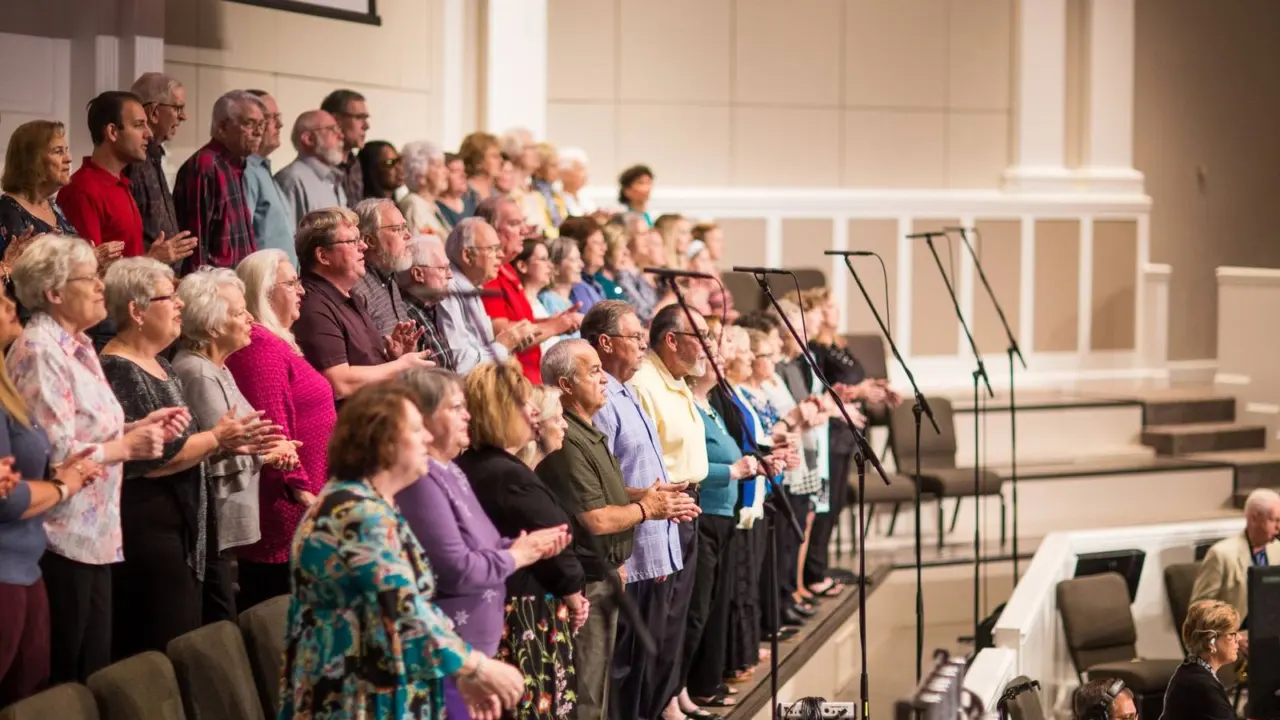
Wondering what is a community choir and whether it’s for you? It’s a local group that sings together regularly, and research suggests people join for friendship, confidence and a new challenge.
Community choirs are one part of the local music and arts scene, and this guide covers the basics.
| Item | Value |
|---|---|
| People who sing regularly in UK choirs | 2.14 million (Voices Now, 2017) |
| Community choirs’ share of UK choir singers | 36%, the largest sector |
| UK people singing in a choir weekly | More than 2 million (as of the University of Sussex report of 17 October 2019) |
| US people singing in a choir | 45 million (as of the same 2019 report) |
| Members interviewed in a UK community choir study | Six (published 2022) |
The figures come from a 2022 paper in Qualitative Health Research and a University of Sussex news report. Figures can change, so check the source before you rely on them.
What a community choir is
In plain terms, a community choir is a locally based group where people sing together on a regular basis. The 2022 paper from the University of West London treats community choirs as a sector of the UK choir world and studies them as community-based group singing (source).
That paper also points out that much research on singing for wellbeing has focused on people with specific health conditions. Fewer studies look at community-based singing, so big claims deserve some care.
A useful way to think about it: a community choir is a social activity built around singing. Any wellbeing benefit is something researchers are still working to understand.
How common are community choirs?
The 2022 paper reports that some 2.14 million people sing regularly in choirs in the UK, citing Voices Now in 2017. It adds that community choirs are the largest sector, at 36% (source).
A University of Sussex news report dated 17 October 2019 gave a similar picture. It said more than 2 million people in the UK sing in a choir weekly, and 45 million do so in the United States (source).
The two sources word their counts differently, “regularly” in one and “weekly” in the other. Treat them as a rough sense of scale rather than an exact head count.

Why people join a community choir
The 2022 study interviewed six members of a UK community choir and asked what drew them in. It found motivations including autonomy, change of life circumstance and seeking a new challenge (source).
Put simply, the reasons it names are:
- Autonomy: choosing an activity for yourself.
- A change of life circumstance: a shift in your situation that makes a new group appealing.
- A new challenge: wanting to learn or try something different.
Six people is a very small sample. It shows themes worth knowing about, not a rule that applies to everyone who walks into a rehearsal.
What group singing may do for wellbeing
The same study grouped its findings into social factors, such as social bonds and group identity, and psychological factors. The psychological ones included self-efficacy, self-identity and positive emotions (source).
The paper’s background section adds some wider findings. A review by Clark and Harding reported that active singing, particularly in a group, is more beneficial to wellbeing and mood than just listening to music. A qualitative study by Judd and Pooley of a community singing group found increased positive emotions and larger social networks.
At the University of Sussex event, GP Dr Sarah Andersen described research on women in choirs. She said choral singing affected their sense of wellbeing in four distinct ways (source):
- Through the joy of singing.
- By being experienced as essential for survival, particularly in times of poor health and mental health crisis.
- As a route to social connection, building identity, belonging, confidence and self-esteem.
- By promoting social inclusion.
Dr Andersen also told the event that research on more than 300,000 people over seven years found those with complex social connections, such as belonging to a choir or a team, lived 50% longer than those without. That is a speaker’s summary reported in a news story, so read it as a prompt for further reading rather than a guarantee (source).
The same report said GPs should prescribe communal singing to raise self-esteem and overcome loneliness. A choir is no substitute for medical care, and your own doctor is the person to ask about your health.
How the leader and style shape the experience
Not every choir feels the same. The 2022 study found that the style and method of the group, the teaching, the music and the group leader all influenced the benefits members perceived (source).
The paper’s background section says the same of earlier work. Past experiences, the type of choir and the musical director seemed to affect the quality of experience and how involved people became.
When you look at a choir, it helps to find out:
- What kind of music the group sings.
- How rehearsals are taught and run.
- How often the group meets.
- Whether the atmosphere feels like somewhere you would want to return.
Where a choir fits among local music groups
A choir is one way to take part in music near you. If you would rather perform solo or hear neighbours play, read about how to start an open mic night for a different kind of community stage.
Groups like these have a long story behind them, and the history of local music scenes shows how they grew.
If you want to try a choir, a simple approach works:
- Look for community groups that meet near you.
- Check what music they sing and who leads them.
- Go along to see how it feels before you decide.
Frequently asked questions
What is a community choir?
Show answer
It is a locally based group that sings together regularly. Researchers study it as community-based group singing, and it is the largest sector of UK choirs at 36% (source).
Why do people join one?
Show answer
In a small study of six choir members, motivations included autonomy, a change of life circumstance and seeking a new challenge. Social bonds and group identity were also key themes (source).
Is singing in a choir good for your health?
Show answer
Research points to social and psychological benefits, but the 2022 paper says research on community-based group singing is lacking. Treat the findings as promising, not as medical advice (source).
How many people sing in choirs?
Show answer
A report from the University of Sussex dated 17 October 2019 said more than 2 million people in the UK sing in a choir weekly, and 45 million do in the United States (source).